
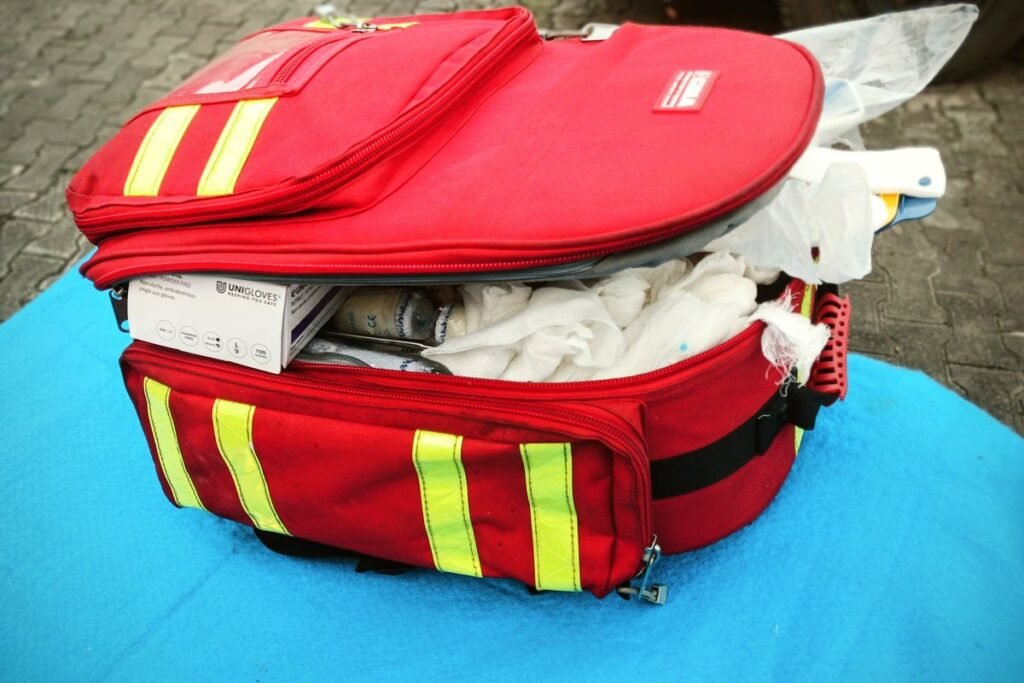
Preventive Health
Would Anyone Know Your Family's Health Details in an Emergency? Build a Card
What to put on a family emergency health card, from medicines and allergies to conditions and contacts, and how to keep it current and private.
7 min read
The purpose of an emergency card
An emergency health card gives responders essential facts when a person is frightened, unconscious, separated from family, or unable to communicate clearly. It should be brief enough to scan quickly and limited enough to protect privacy. It complements identification systems and official medical records; it does not replace them.
Essential identity and contact details
Include the person’s preferred name, date of birth, an emergency contact with relationship and phone number, and a second contact if possible. Add the primary clinician or clinic and a preferred language or communication need. Consider whether a home address is truly necessary before placing it on a wallet card.
Health information that may change immediate care
List serious allergies and the reaction, major conditions relevant in an emergency, current critical medicines with doses, implanted devices, and special instructions documented by a clinician. Use plain names and avoid unexplained abbreviations. If there are no known drug allergies, write that clearly rather than leaving the space blank.
What to leave off
Avoid full insurance numbers, government identification numbers, passwords, complete medical histories, stigmatizing labels without clinical relevance, and information that would not affect immediate decisions. Do not include an instruction that has not been discussed with the appropriate clinician or legally documented where required.
Design for fast reading
Use high contrast, a readable font, short labels, and enough white space. Print on both sides only if “continued on back” is obvious. A card sleeve protects the paper and makes updates easy; lamination is durable but requires replacement whenever details change. Consider a larger copy for a child’s school bag, travel kit, or household emergency folder.
Create cards for children and dependent adults
Include guardian contacts, communication needs, baseline behaviour or function when relevant, essential equipment, and an action plan for known emergencies such as severe allergy or seizures, based on professional guidance. Coordinate with schools, carers, and workplaces so their records match the card. Follow privacy and consent requirements.
Keep copies where they can be found
Place one in a wallet, bag, travel kit, and accessible emergency folder. A secure phone Medical ID can be useful, but responders may not always access it. Tell trusted contacts where copies are stored. Do not post the card publicly or attach an unprotected full record to a visible QR code.
Review and update
Check cards every six months and after any medicine, allergy, contact, diagnosis, or care-plan change. Put a “last updated” date on each card and destroy outdated copies securely. During a routine appointment, ask a clinician to confirm that critical health wording is accurate and understandable.
Quick action checklist
Optional tools that may help
Option 1: Emergency Medical Information Cards with Protective Sleeves — The simplest ready-to-fill option for wallets and bags. Choose cards with readable fields for allergies, medicines, conditions, and emergency contacts, without exposing unnecessary identifiers.
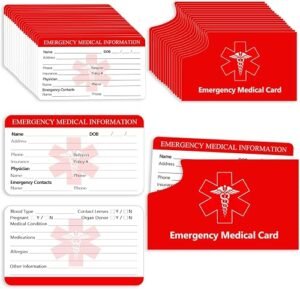
Option 2: Scotch Thermal Laminator TL901X — Useful when a household prepares several durable emergency cards and notices. Lamination is best for stable information; replace the complete card whenever a key detail changes.

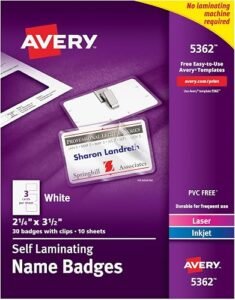
Option 3: Avery Self-Laminating Cards or Badge Holders — A lower-commitment option for protecting printed cards without buying a laminating machine. Check finished size, clarity, seal quality, and whether the card remains easy to replace.
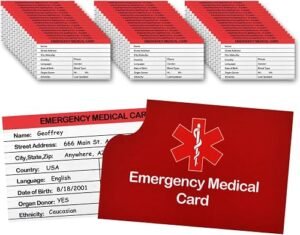
More choices: Browse more emergency medical cards and sleeves — Use this broader link to compare wallet cards, card protectors, luggage inserts, and related emergency-information supplies.
Use this guide in the next week
Build the card for the moment when the person cannot explain their own history. Include the preferred name, date of birth, an emergency contact with the relationship and phone number, a second contact if you have one, and the primary clinician or clinic. On the health side, list serious allergies and the reaction, conditions that would change emergency care, current critical medicines with doses, implanted devices, and any special instruction a responder would need immediately. Leave off passwords, full insurance numbers, government identification numbers, and a long history that will not be read in a hurry. High contrast, a readable font, and a clear note that the card continues on the back matter more than a clever layout.
Children and adults who depend on someone else need guardian contacts, communication needs, essential equipment, and the plan for a known emergency such as a severe allergy. Keep one copy in a wallet, bag, or travel kit and another where a caregiver can find it, and tell the household where those copies are. A phone medical ID can help, and the article notes that responders may not always be able to open the phone. Put a last-updated date on the card. Review it at least every six to twelve months and after any medicine, allergy, contact, diagnosis, or care-plan change, then destroy the old copy so two versions are not in circulation. The card does not replace emergency care. In an emergency, contact local emergency services.
If nobody can find the card when it matters
- It lives only on one phone: keep a paper copy in wallet/diaper bag and a photo in a shared album for caregivers.
- It is outdated: update after every medicine change, new allergy, or specialist—same discipline as preparing for a new doctor visit.
- Privacy worries stop you: store full details in a secure place; carry a shorter card with allergies, medicines, conditions, and emergency contacts.
- Kids or caregivers need access: teach older children and sitters where the card is without posting sensitive data publicly.
For a fuller home system, compare binder vs digital organizer and keep family history current with how often to update health history.
Frequently asked questions
What health facts belong on the card?
Include the preferred name, date of birth, and an emergency contact with a phone number. Add serious allergies and the reaction, critical medicines with doses, and devices a responder would need immediately. Leave off passwords, full insurance numbers, and a long history.
Is a phone medical ID enough on its own?
A phone medical ID can help, but responders may not be able to open the phone. Keep a paper copy in a wallet, bag, or travel kit. Tell the household where those copies are.
When should I replace an old card?
Put a last-updated date on every card. Review it every six months, and after a medicine, allergy, contact, or care-plan change. Destroy the old copy so two versions are not in use.
Medical disclaimer
This content is for general educational purposes only and is not medical advice, diagnosis, or treatment. Recommendations vary by person and location. Consult an appropriately qualified health professional about personal concerns. In an emergency, contact local emergency services.
Key takeaways
- An emergency card only helps if caregivers can find a current copy under stress.
- Include medicines, allergies with reactions, key conditions, and contacts.
- Balance usefulness with privacy—full records can stay secured at home.
- Update the card whenever medicines or diagnoses change.
Related reads
Sources
- CDC – Keep Calm and Carry an Emergency Card: https://blogs.cdc.gov/publichealthmatters/2019/09/emergency-card/
- American College of Emergency Physicians – Medical Forms: https://www.acep.org/by-medical-focus/pediatrics/medical-forms
Affiliate disclosure. This article contains Amazon affiliate links. If you buy through a qualifying link, Full Healthy Lives may earn a commission at no extra cost to you. Product mentions are optional, not medical advice.