
Can't Stick to Workouts? A 4-Week Beginner Strength Plan You Can Do at Home
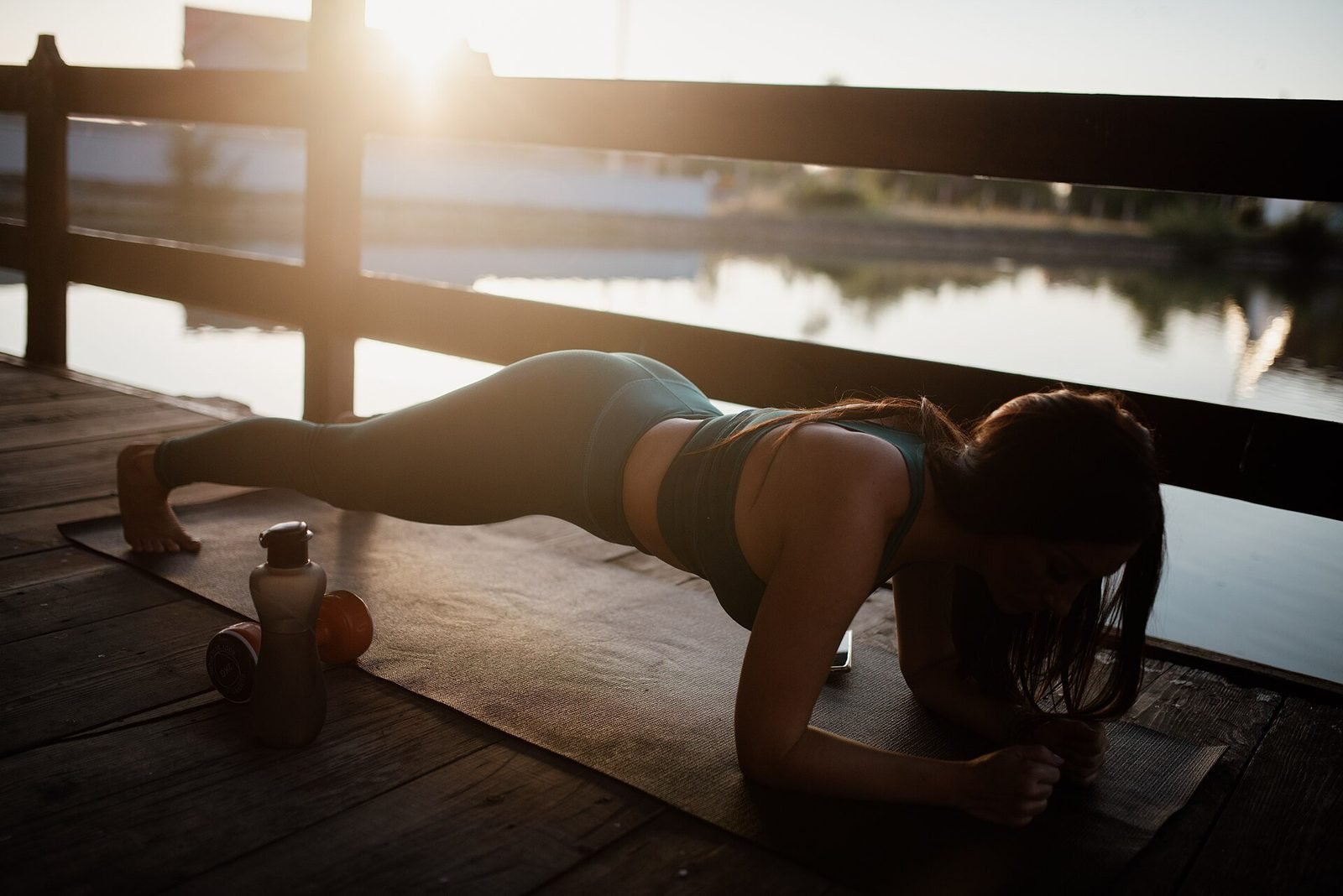
You do not need a gym membership to begin resistance training. This plan uses basic movement patterns and explains how to start conservatively, progress gradually, and recognize when medical or professional guidance is appropriate.
Strength training can look intimidating because the most visible examples often involve heavy barbells, complicated programs, or crowded gyms. For a beginner, the useful starting point is much simpler: practice a small number of movement patterns, use resistance that feels manageable, recover between sessions, and gradually make the work more challenging.
The U.S. Centers for Disease Control and Prevention recommends that adults perform muscle-strengthening activities on at least two days each week, working all major muscle groups. That recommendation does not require a gym. Body weight, resistance bands, household items, and adjustable dumbbells can all provide resistance.
This article offers a general starting plan for healthy adults. If you have a chronic condition, recent surgery, pregnancy or postpartum concerns, significant pain, balance problems, cardiovascular symptoms, or have been advised to restrict activity, ask a healthcare professional what is appropriate for you.
What counts as strength training?
CDC describes muscle-strengthening activity as work that makes muscles work harder than usual. Examples include lifting weights, using resistance bands, heavy gardening, some yoga positions, and body-weight exercises such as push-ups or sit-ups.
The key is resistance. A movement becomes strength training when the muscles must produce meaningful force against a load.
Walking is excellent physical activity, but ordinary walking alone is not usually enough to satisfy the muscle-strengthening recommendation for all major muscle groups.
Start with movement patterns, not a huge exercise list
A balanced beginner routine can be built around five patterns:
- Squat or sit-to-stand
- Hip hinge or bridge
- Push
- Pull
- Carry or core stabilization
You do not need a perfect version of each on day one. Choose variations that feel stable and pain-free.
Exercise 1: chair squat or sit-to-stand
Sit near the front of a sturdy chair with feet planted. Lean slightly forward and stand. Sit back down with control.
Use your hands for assistance if needed. To make it harder over time, use less hand support, slow the lowering phase, hold a light weight at your chest, or use a lower chair if appropriate.
This movement trains the legs and hips and resembles an everyday task.
Exercise 2: glute bridge or supported hip hinge
For a bridge, lie on your back with knees bent and feet on the floor, then lift the hips comfortably and lower with control.
If floor exercise is not practical, practice a hip hinge while standing: push the hips back while keeping the spine in a comfortable neutral position, then stand tall. You can use a wall behind you as a target.
Later, add resistance by holding a weight close to the body.
Exercise 3: wall or counter push-up
Place your hands on a wall or sturdy counter, keep the body in a straight line, bend the elbows to bring the chest closer, then press away.
A more horizontal body position makes the exercise harder. Progress from wall to high counter to lower counter before considering floor push-ups.
Choose a surface that cannot move.
Exercise 4: resistance-band row
Anchor a resistance band only to a secure point designed to handle the force. Pull the band toward your torso while keeping shoulders controlled, then return slowly.
If you do not have a safe anchor, use a one-arm row with a light dumbbell or a securely handled household object while supporting yourself with the other hand.
Stop if you cannot maintain control or if the setup itself feels unsafe.
Exercise 5: carry or dead-bug variation
A carry is simple: hold a manageable weight at your side or in both hands and walk slowly with an upright posture. Make sure the path is clear.
For a no-equipment core option, use a dead-bug variation on the floor or a standing march while maintaining trunk control.
Core training does not require hundreds of crunches. The goal is to train the trunk to support movement.
A two-day beginner schedule
Start with two nonconsecutive days if possible, such as Tuesday and Friday.
- Session A: Chair squat: 1 to 2 sets – Wall or counter push-up: 1 to 2 sets – Band or dumbbell row: 1 to 2 sets – Glute bridge: 1 to 2 sets – Carry or standing march: 1 to 2 rounds
- Session B: Repeat the same exercises or use small variations.
You do not need a complex split routine as a beginner. Repeating basic movements can help you learn technique and notice progress.
How many repetitions?
CDC notes that muscle-strengthening activities should be challenging enough that it would be difficult to do another repetition without help. For beginners, however, you do not need to push every set to complete exhaustion.
A practical starting range is often 6 to 12 controlled repetitions for many exercises, stopping with a few good repetitions still possible. Some movements, carries, and holds are better measured by time or distance.
There is no need to chase a specific repetition number if technique breaks down first.
Learn the difference between effort and pain
Muscular effort, warmth, and fatigue are expected. Sharp pain, sudden joint pain, numbness, chest pain, severe shortness of breath, faintness, or a feeling that something is wrong are not goals.
Stop and seek appropriate guidance if concerning symptoms occur. Delayed muscle soreness can happen after new activity and often peaks a day or two later, but severe pain, swelling, weakness, or inability to use a limb normally should be evaluated.
How to progress without guessing
Progressive overload means gradually increasing the challenge as your body adapts. That can happen in several ways:
- Add one or two repetitions
- Add a second or third set
- Use slightly more resistance
- Choose a harder exercise variation
- Slow the lowering phase
- Increase range of motion when comfortable
- Improve control and technique
Change one variable at a time. If you add weight, volume, and difficulty simultaneously, it becomes harder to know what caused excessive soreness or pain.
Equipment you actually need
You can begin with no equipment beyond a sturdy chair and wall. Resistance bands or a pair of light dumbbells can expand your options, but they are not mandatory.
If you use household items, choose objects with secure handles and predictable weight. A backpack can be loaded gradually, but make sure it closes securely and does not shift dangerously.
Avoid improvised setups that could fall, snap, or roll.
Warm-up and cool-down
A warm-up does not have to be long. Spend five to ten minutes moving comfortably: walking, marching, shoulder circles, body-weight sit-to-stands, and easy versions of the exercises you will perform.
The goal is preparation, not fatigue.
After training, you can walk gently and let breathing return to normal. Static stretching is optional for many people; it is not required to make the workout “count.”
How strength fits with aerobic activity
CDC recommends both aerobic activity and muscle-strengthening activity. For adults, the aerobic guideline is at least 150 minutes of moderate-intensity activity per week, 75 minutes of vigorous activity, or an equivalent combination, plus strengthening on at least two days.
You do not have to achieve the full recommendation immediately. CDC also emphasizes that some physical activity is better than none and that activity can be spread across the week.
If you are starting from very little activity, building the habit safely is more important than hitting every target in the first week.
Recovery matters
Muscles adapt between sessions. Sleep, food, hydration, and spacing hard sessions are part of training.
You do not need a special recovery supplement after every workout. A normal balanced eating pattern with adequate energy and protein is sufficient for many recreational exercisers.
If soreness repeatedly lasts for many days, performance declines, or every session feels harder, reduce volume or intensity and review sleep, nutrition, illness, and stress.
When to get coaching
A qualified trainer or physical therapist can be useful if you feel uncertain about technique, have a history of injury, want to lift heavier loads, or need exercises adapted to pain, disability, pregnancy, postpartum recovery, or a chronic condition.
Choose professionals who work within their scope and do not promise to diagnose or cure medical problems through exercise alone.
A four-week starting progression
- Week 1: Learn the five movements. One set each may be enough.
- Week 2: Repeat two sessions and add repetitions only if form remains comfortable.
- Week 3: Add a second set to two or three exercises.
- Week 4: Increase resistance slightly on one or two movements or choose a modestly harder variation.
This is an example, not a required timeline. Some people progress faster; others need more time.
If you keep quitting after week one
- Sessions feel too long: cut to two movements for ten minutes. Showing up beats a heroic plan you abandon.
- Soreness scares you off: mild muscle soreness can be normal; sharp joint pain is not. Reduce range or load and reassess.
- No equipment derails you: chair squats, wall push-ups, and glute bridges need almost nothing—start there.
- Motivation depends on perfect mornings: attach the session to an existing cue (after coffee, during nap time) and use the habit tracking approach to log only whether you started.
Strength is easier to keep when sleep and stress are not in free fall—see waking up tired and a 10-minute stress reset. If you are postpartum, get clearance and guidance first; our postpartum exercise questions list helps you ask the right things.
Frequently asked questions
Can body-weight exercises build strength?
Yes, body weight can build strength at the start, including push-ups and similar moves. A sturdy chair and a wall can be enough. Harder versions or added weight may be needed later.
Do beginners need to strength train every day?
No, CDC recommends muscle-strengthening on at least two days a week. This plan uses two nonconsecutive days and repeats a few patterns. More days are not automatically better if you cannot recover.
Does muscle soreness prove the workout worked?
No, new exercise can leave you sore a day or two later. Progress does not require soreness every session. Sharp or persistent joint pain is a reason to stop and get guidance.
Key takeaways
- Train basic movement patterns with simple progressions—not a huge exercise list.
- Use effort you can repeat; stop for sharp pain and get coaching when form is unclear.
- Two short sessions per week beat one perfect workout you never repeat.
- Progress by adding reps or slightly harder variations only after technique feels steady.
Related reads
The bottom line
Beginner strength training can be simple. Train two days per week, practice a few major movement patterns, use resistance you can control, and progress gradually. A home program can satisfy the basic muscle-strengthening goal without specialized equipment. The best program is not the hardest one; it is the one you can perform safely and consistently enough to improve over time.
Medical disclaimer
This is general information, not personal medical advice, diagnosis, or treatment. A clinician should guide decisions about symptoms, medicines, vaccines, pregnancy, or children. In an emergency, contact local emergency services.
Sources
- CDC, Adult Activity Overview: https://www.cdc.gov/physical-activity-basics/guidelines/adults.html
- CDC, What Counts as Physical Activity for Adults: https://www.cdc.gov/physical-activity-basics/adding-adults/what-counts.html