
Unsure What Belongs in Your Baby's Crib? A Safe Sleep Space Checklist
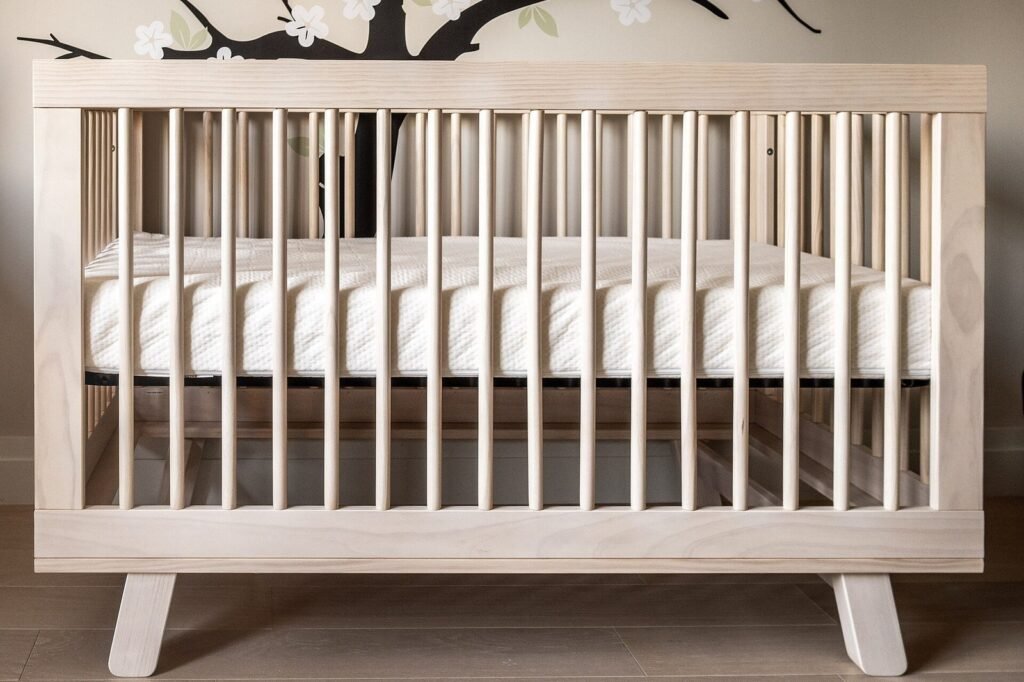
A baby sleep space should be simple. This checklist focuses on what belongs in the crib, what should stay out, and how to check products for current safety information.
October 18, 2026 • Parenting Products
Introduction
Infant sleep spaces are one area where adding comfort items can conflict with current safety guidance.
What the evidence and guidance actually say
- CDC recommends placing babies on their backs for all sleep times and using a firm, flat sleep surface in a safety-approved crib, covered only by a fitted sheet.
- CDC and CPSC advise keeping soft bedding, pillows, bumpers, and soft toys out of the infant sleep area.
- CPSC advises transferring a baby who falls asleep in a swing, bouncer, lounger, or similar product to a product intended for sleep.
What belongs in the crib
For routine infant sleep, the setup is intentionally minimal. Use a safety-approved crib with the appropriate mattress and a fitted sheet that fits that sleep surface.
What should stay out
Soft and padded items can create suffocation or entrapment hazards. Do not add pillows, blankets, quilts, comforters, padded crib bumpers, sleep positioners, or soft toys to the sleep space.
Use the back position for every sleep
CDC recommends placing babies on their backs for naps and nighttime sleep. Make this the default for every caregiver so the baby is not placed differently depending on who is watching them.
Do not turn sitting products into beds
A product designed for play, soothing, transport, or sitting is not automatically a safe sleep surface. If a baby falls asleep in a swing or bouncer, follow CPSC guidance and move the baby to a crib, bassinet, play yard, or bedside sleeper intended for sleep.
Check the product itself
A clear sleep space does not compensate for a recalled, damaged, or incorrectly assembled crib. Check model information, recall status, hardware, mattress fit, and the manufacturer instructions, especially for secondhand equipment.
Recheck as the baby grows
Mobility changes can reveal new hazards around and inside the crib. Keep cords, monitor cables, furniture, and climbable objects away from the crib and follow manufacturer guidance on mattress-height changes.
Align every caregiver
Safe-sleep practices work better when grandparents, sitters, and other caregivers use the same setup. Show them the sleep space rather than assuming everyone has seen current guidance.
Room-by-room crib check
Look above and beside the crib for cords from blinds, monitors, lamps, or chargers that could become reachable as the baby grows.
Check that the mattress fits the crib as intended and that hardware is present and secure according to the manufacturer instructions.
Confirm that every caregiver knows that “bare is best” means the sleep space itself stays free of pillows, quilts, stuffed toys, positioners, and bumpers.
Why simplicity matters
Adult ideas about comfort do not map directly onto infant sleep safety. Softness, padding, and loose bedding can introduce hazards rather than provide a benefit.
Product marketing can also be confusing. A product that shows a sleeping baby in advertising is not automatically approved or intended for routine infant sleep.
When in doubt, use CPSC and CDC guidance and the exact manufacturer instructions for the sleep product.
Crib clear-space checklist
If the crib still looks empty and that worries you
- Cold nights: use correctly sized sleep clothing or a wearable blanket—not loose quilts.
- Family pressure to add bumpers: share safe-sleep guidance; soft decor is not worth the risk—see nursery safety basics.
- Used crib: verify with secondhand gear checks and recall lookups before assembly.
Room-sharing without bed-sharing
The American Academy of Pediatrics recommends that babies sleep in the parents’ room, close to the parents’ bed but on a separate surface designed for infants, ideally for at least the first six months. This makes night feeds easier while keeping the baby’s sleep space separate. A crib, bassinet, or play yard that meets current safety standards is appropriate.
Temperature and clothing
Overheating is a risk for babies during sleep. Dress the baby in no more than one extra layer than an adult would wear to be comfortable in the same room, and avoid hats indoors during sleep. A wearable blanket can replace loose blankets. Check for overheating by feeling the baby’s chest or the back of the neck; sweating or flushed skin means they are too warm.
When the baby falls asleep elsewhere
Babies often fall asleep in car seats, swings, strollers, or carriers. These are not safe places for routine sleep, because the baby’s position can restrict breathing. When you arrive at your destination, move the baby to a firm, flat sleep space. Our article on babywearing safely covers carrier positioning.
Pacifiers and sleep
The American Academy of Pediatrics notes that offering a pacifier at nap time and bedtime may help reduce the risk of sleep-related deaths. Do not attach the pacifier to clothing, a stuffed toy, or a cord around the baby’s neck, since these can cause strangulation or suffocation. If the pacifier falls out after the baby is asleep, you do not need to put it back. For breastfed babies, many families wait until breastfeeding is well established before offering one.
Sharing the checklist with caregivers
Grandparents, babysitters, and childcare providers may have learned different advice. Print the checklist and share it, and show them where the baby sleeps and how it is set up.
Frequently asked questions
Can I use a blanket if the room is cold?
Current CDC and CPSC guidance says to keep loose blankets out of the infant sleep space. Ask the child’s clinician about appropriate sleep clothing if temperature is a concern.
Are crib bumpers okay if they are breathable?
Padded crib bumpers are banned under U.S. federal law, and CPSC guidance is to keep the sleep space bare.
What if my baby falls asleep in a car seat at home?
Travel safety and sleep guidance are separate issues. If a baby falls asleep in a seated or inclined product outside travel, CPSC advises moving the baby to a firm, flat sleep surface intended for sleep.
How often should I check recalls?
Check when buying, receiving secondhand gear, after product-safety news, and periodically as part of household safety reviews. There is no single federally mandated household recall-check interval.
Crib changes as your baby grows
| Milestone | What to change |
|---|---|
| Shows signs of trying to roll | Stop swaddling. A wearable blanket with free arms is an option instead of loose bedding. |
| Pushes up on hands and knees, or about 5 months | Remove any crib mobile or hanging toy, whichever comes first. |
| Can sit up unassisted | Lower the mattress, following the crib manual. |
| Can pull up to standing | Move the mattress to its lowest setting and check that nothing in or near the crib can be used as a step. |
Each time you adjust the mattress, check that it still fits snugly with no gaps at the sides, and tighten any loose hardware. Keep the crib away from windows, blind cords, and lamp or monitor cords.
Key takeaways
- Keep the sleep space clear, firm, and flat—cute clutter does not belong in the crib.
- Place the crib away from cords and window coverings.
- Check recalls and hardware before the first night.
- Ask a clinician about any special positioning devices—do not improvise.