
Parenting Products
Overwhelmed by Stroller Options? The Features That Matter for Your Family

How to choose a stroller that fits your child, your routes, and your car or storage space, with the safety features to check and a simple test drive before you buy.
8 min read
A stroller is one of the most expensive pieces of baby gear most families buy, and one of the easiest to get wrong. The best-reviewed model can still be a poor fit if it won’t fold into your trunk, can’t handle your sidewalks, or is too heavy for the person who lifts it most. Start with how you’ll use it, then check safety features, then test it in person if you can.
Start with your family’s real use case
Picture an ordinary week. Families who ride buses or trains often value a compact, one-hand fold and a weight they can carry up stairs. Families walking on cracked or uneven pavement may accept more weight for larger wheels and better suspension. Families who drive most places should rehearse folding and loading before committing, ideally with the car they actually own.
A few questions narrow the field quickly:
- Where will you push it most: city sidewalks, suburban paths, gravel, shopping centers, or airports?
- Who will fold, lift, and push it, and how tall are they?
- Where will it live: a car trunk, a small apartment, a hallway, a shared stairwell?
- Will you use it from birth, or only once your child can sit up?
- Is a second child likely in the next couple of years?
Understand the main stroller types
Full-size stroller. Usually offers a larger basket, a roomier seat, and smoother everyday features, with more weight and a bulkier fold. Many can take an infant car seat or bassinet attachment.
Compact or travel stroller. Prioritizes a small fold and light weight, often with smaller wheels and less storage. Check the minimum age: some aren’t designed for newborns without an attachment.
Jogging or all-terrain stroller. Larger wheels and a frame built for stability on rough ground. Follow the maker’s age limits for jogging, which are often stricter than for walking, and ask your pediatrician if you’re unsure when your baby is ready.
Travel system. A stroller sold with a compatible infant car seat that clicks into it. Convenient for short trips with a sleeping baby, but confirm that every component and adapter is approved for the exact models involved.
Double stroller. Side-by-side models are often easier to steer but wider in doorways. Tandem (front and back) models fit through doors more easily but can be longer and harder to tip over curbs.
Safety features to check
The American Academy of Pediatrics’ guidance on choosing a stroller focuses on a few features that matter every day:
- Brakes. Easy for you to operate, out of your child’s reach, and ideally locking two wheels rather than one. Use them every time you stop.
- A wide, stable base so the stroller is hard to tip.
- A five-point harness, with straps over both shoulders, at the hips, and between the legs. Use it on every ride, even short ones.
- Folding hinges and wheels your child’s fingers can’t reach. Keep children back while you open or close the stroller, and make sure it’s locked open before the child goes in.
- A low basket near the rear wheels, so bags don’t have to hang from the handle.
In the United States, strollers are covered by a mandatory federal safety standard enforced by the Consumer Product Safety Commission (CPSC). It addresses stability, brakes, restraints, latches and folding mechanisms, and openings where a child could become trapped. A stroller sold through reputable channels in the U.S. should meet it, but it’s still worth checking the label for the model number and manufacture date, and registering the product so the maker can contact you about recalls.
Compare the details that affect daily life
- A seat and harness approved for your child’s current age, weight, and development, including a full recline or approved attachment for a newborn.
- Wheel size and suspension suited to the surfaces you’ll actually use.
- Folded size and weight that fit your car, stairs, storage space, and the strongest regular caregiver.
- A handlebar that adjusts for the tallest and shortest person who’ll push it, so no one hunches or kicks the frame.
- A canopy, basket, and fabric you can clean and that still work in rain, sun, and cold.
Test-drive before you buy
If you can see the stroller in person, spend ten minutes doing what you’ll do every day:
- Fold and unfold it with one hand while holding a bag in the other.
- Lift it to the height of your trunk or the top of a stair.
- Push it over a curb, a doorway threshold, and a turn in a narrow aisle.
- Set and release the brake in the shoes you usually wear.
- Reach the basket with the seat fully reclined.
- Adjust the harness and the handlebar.
Measure at home first: the trunk opening and depth, the narrowest doorway or elevator, and the space where the stroller will be stored. Many returns come down to a few inches.
Strollers to compare
These are examples of the main styles, not a ranking. Check each one against your measurements and your child’s age and weight before buying.
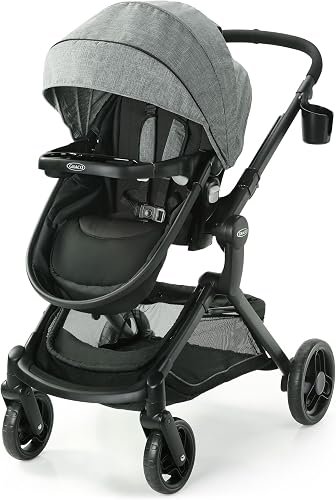 Graco Modes Nest stroller — A modular full-size style to compare if you want multiple seat configurations and a larger everyday frame.
 Baby Jogger City Mini GT2 — An all-terrain-leaning everyday option to compare for maneuverability and larger wheels.
 Summer 3Dlite stroller — A lightweight umbrella-style option to compare for travel, stairs, or limited storage.
- Browse more full-size, compact, and travel strollers — Use the criteria in this guide to compare additional models, current sizes, and configurations rather than choosing from the first search results.

Buying secondhand
A used stroller can be a sensible choice, but it needs a closer look. Find the model number and manufacture date on the label, then search the CPSC recall database. Our guide to checking baby product recalls walks through that step by step. Then check that the frame is straight, the brakes hold on a slope, the wheels spin and lock properly, the harness and buckle work, the fold locks firmly, and no parts are missing. Look for the instructions on the manufacturer’s site if they didn’t come with it. Skip any stroller with a missing label, cracked frame, or broken harness.
Using it safely every day
- Don’t hang bags on the handle. The AAP warns that weight on the handlebar can tip a stroller backward. Use the basket.
- Buckle the harness every time. Short trips are when it’s most tempting to skip it.
- Brake whenever you stop, especially on slopes or near traffic.
- Never leave a child unattended in a stroller.
- Keep sleep supervised. If your baby falls asleep, keep them in view. For longer or unsupervised sleep, move them to a firm, flat surface made for infant sleep, such as a crib or bassinet.
- Check the stroller now and then: brakes, wheels, harness, and fold locks. Our room-by-room baby gear safety audit includes a quick gear check you can repeat every few months.
Some families find a carrier easier for errands, stairs, or crowded places, and use the stroller for longer walks. If that’s you, see our baby carrier buying guide. A stroller walk is also an easy way to ease back into activity after birth. Our guide to gentle postpartum movement covers what to ask your clinician first.
Common mistakes
- Treating a stroller as a substitute for an approved sleep space.
- Hanging heavy bags on the handle where they can affect stability.
- Skipping the harness because the trip is short.
- Buying before measuring the car trunk, doorway, elevator, or storage closet.
- Choosing a jogging stroller and running with a baby who is younger than the maker’s minimum age for jogging.
Features that usually matter more than extras
- Secure harness and easy brake you will actually use
- Fold that fits your storage and one-handed reality
- Wheel type matched to your sidewalks or transit
- Recline and weight limits for your child’s stage
- Under-seat access you can reach without waking a sleeper
Travel systems and following-seat strollers solve real problems for some families and create bulk for others. Choose from your weekly route, not from a registry checklist.
If the stroller is fighting your routine
- It will not fit your trunk or doorway: measure before you buy; fold practice in the store aisle.
- One-handed fold is impossible with a baby in the other arm: prioritize the fold you can repeat under stress.
- Storage is a black hole: use a small attached pouch for the same essentials as your diaper-bag core kit.
- You inherited it: verify recalls and wear with secondhand gear checks before the first outing.
Frequently asked questions
Do I need a travel system?
Only if clicking an infant car seat into the stroller solves a real need, such as frequent short car trips with a sleeping baby. Confirm that every component and adapter is approved for the exact models involved.
Can a baby sleep in a stroller?
If a baby falls asleep during a walk, keep them in view and follow the stroller instructions. For routine or unattended sleep, move them to a firm, flat product designed for infant sleep.
What should I check on a used stroller?
The model number and manufacture date, recall status, frame alignment, brakes, wheels, fold locks, harness, fabric, missing parts, and the original instructions.
Is a lightweight stroller fine from birth?
Only if the manufacturer says it’s suitable for newborns, usually with a full recline or an approved bassinet or car-seat attachment. Many umbrella-style strollers are meant for older babies.
Key takeaways
- Match stroller type to your real terrain, storage, and daily routine—not to Instagram features.
- Test fold, weight, brake, and harness before you commit.
- Check recalls and weight limits; keep hands free and restraints used every time.
- Reassess when your baby outgrows the seat or your commute changes.
Related reads
Sources
- American Academy of Pediatrics (HealthyChildren.org) – How to Choose a Safe Baby Stroller
- U.S. Consumer Product Safety Commission – Carriages and Strollers
- U.S. Consumer Product Safety Commission – Recalls
- CPSC – Durable Infant or Toddler Products
Medical disclaimer
This is general information, not personal medical advice, diagnosis, or treatment. A clinician should guide decisions about symptoms, medicines, vaccines, pregnancy, or children. In an emergency, contact local emergency services.
Affiliate disclosure. This article contains Amazon affiliate links. If you buy through a qualifying link, Full Healthy Lives may earn a commission at no extra cost to you. Product mentions are optional, not medical advice.