
Parenting Products
Kids Can't Put Their Toys Away? Storage They Can Use on Their Own
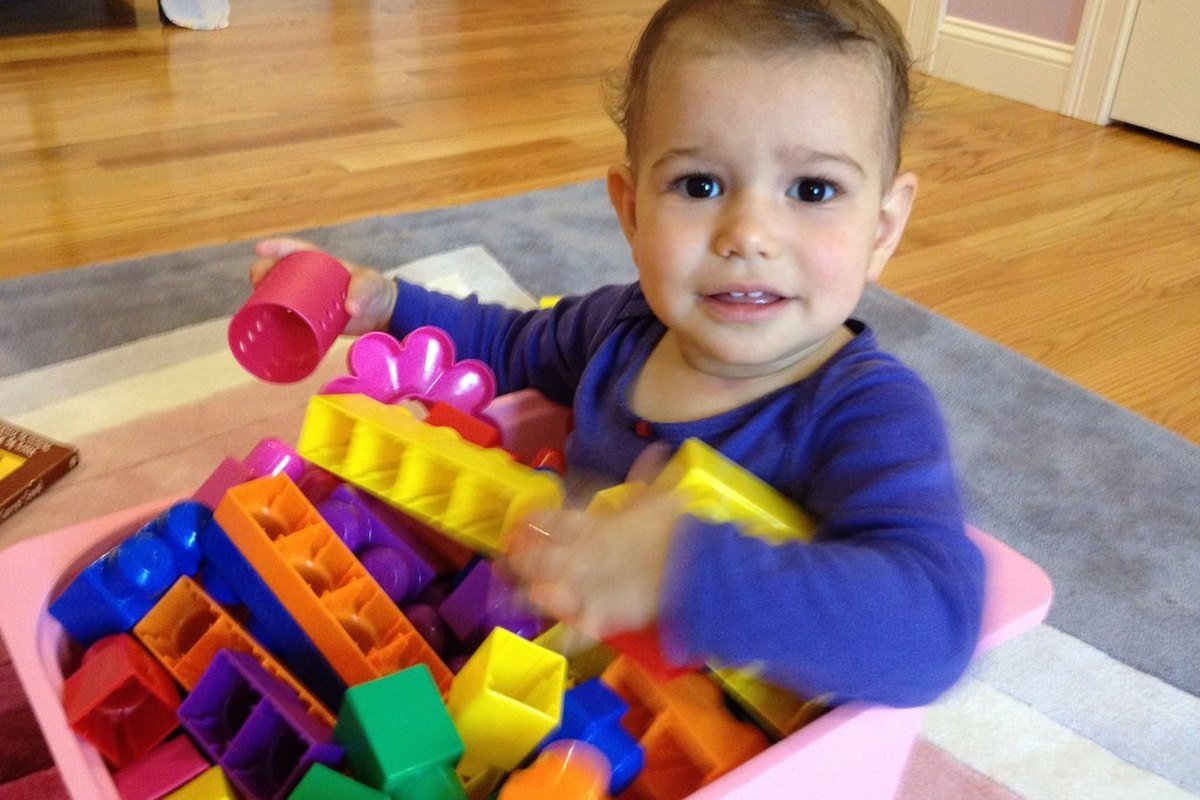
Create child-friendly toy storage with reachable open bins, simple categories, picture labels, safe anchoring, and a realistic reset routine.
7 min read
Start with your family’s real use case
Choose five broad categories, place one picture label on each bin, and leave roughly one-quarter of each bin empty. Demonstrate a two-minute reset, observe where the child hesitates, and change the system instead of repeatedly correcting the child.
Understand the main product types
Low open bins. Make contents visible and returning toys simple, especially when each bin holds one broad category.
Anchored cube shelving. Creates repeatable zones for bins and books but must be secured and kept from becoming a climbing structure.
Rotating shelf or basket system. Keeps the active selection manageable while reserve toys remain stored safely elsewhere.
Key criteria to compare before buying
- Storage height and handles the child can reach without climbing or pulling heavy loads overhead.
- Furniture stability and anchoring appropriate to the wall, unit, floor, and manufacturer instructions.
- Bins light enough for the child to move, with no sharp edges, pinch hazards, or heavy lids.
- Simple picture-and-word labels based on categories the child actually understands.
- Enough empty capacity that cleanup does not require perfect arranging or force.
Relevant Amazon options to compare
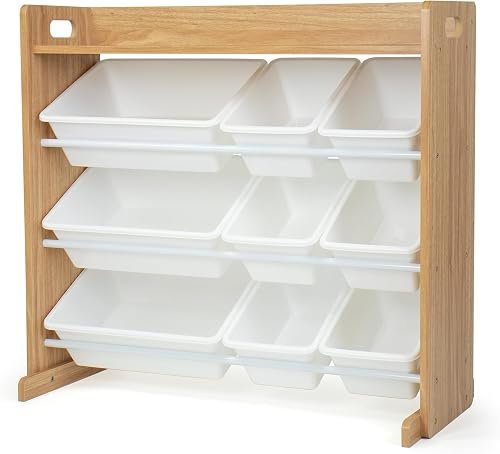 Humble Crew toy organizer — A low open-bin unit to compare for visible categories and quick access.
 Delta Children multi-bin organizer — Another child-height bin system to compare for capacity, footprint, and anchoring requirements.
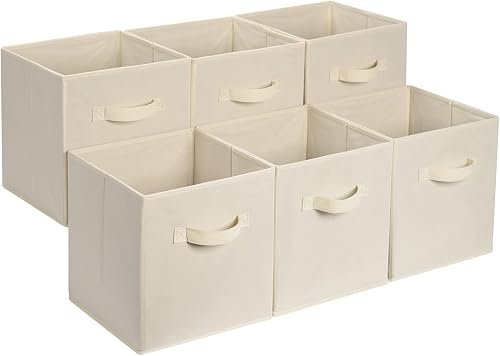 Amazon Basics cube organizer with fabric bins — A modular category system to compare only with correct assembly, loading, and wall anchoring.
Common mistakes and why they matter
- Using a heavy-lidded toy chest that can pinch fingers or trap a child.
- Placing attractive toys on top of tall furniture and unintentionally encouraging climbing.
- Creating too many narrow categories for a young child to remember.
- Filling every container to the top so the child cannot return items independently.
How many toy categories should we use?
Start with three to six broad groups, depending on age and collection size. Add detail only when the child consistently uses the current system.
Do cube shelves need anchoring?
Treat climbable storage furniture as a tip-over risk and anchor it according to both the furniture and wall-hardware instructions.
What should stay out of reach?
Small parts, batteries, magnets, cords, heavy objects, messy materials requiring supervision, and toys intended for older children should remain secured.
Storage safety: toy chests and tip-overs
Storage that children use on their own needs to be safe when they climb, lean, or crawl inside it, because they will.
- Toy chests with hinged lids. The CPSC warns that heavy lids can fall on a child’s head or neck, and that a child can become trapped inside a chest. Choose open bins or a chest with no lid, or one with a lid support that holds the lid open in any position. Check that the chest has ventilation holes and no latch that can lock a child inside.
- Shelves and dressers. Anchor bookcases, cube storage, and dressers to the wall with anti-tip devices. The CPSC’s childproofing guidance recommends anchoring furniture and TVs, since children often climb shelves to reach toys.
- Heavy items low. Keep the heaviest bins on the bottom shelf, and do not put favorite toys on top of tall furniture where they invite climbing.
Keeping small parts away from younger siblings
Older children’s sets, such as building bricks, beads, and game pieces, often have parts small enough to choke a baby or toddler. U.S. federal rules (16 CFR part 1501) ban toys with small parts for children under 3, but that rule does not stop small parts from big siblings’ toys reaching the floor.
- Store small-piece sets in lidded boxes on a high shelf or in a room the youngest child does not use alone.
- Give the older child a play mat or tray that defines where those pieces can be used.
- Make a two-minute sweep of the floor part of the clean-up routine.
Our room-by-room safety audit can help you check the rest of the home too.
Rotate toys to keep clean-up manageable
Children cannot put away more than they can see and manage. Toy rotation keeps the amount out at once small:
- Divide toys into three or four groups, each with a mix of building, pretend play, books, and art.
- Keep one group out and store the rest in labeled bins in a closet or garage.
- Swap groups every week or two, or when interest drops.
- Keep favorites, such as a comfort toy or a current obsession, out all the time.
Rotation also makes old toys feel new again, which can mean fewer requests for new ones.
Teaching clean-up as a skill
Putting toys away is something children learn gradually. The CDC’s parenting guidance for toddlers notes that structure and consistent routines help young children know what to expect. Expectations that fit the child’s age make clean-up more likely to happen:
- Toddlers: clean up together, one category at a time. “All the cars go in the red bin.” Praise effort, not perfection.
- Preschoolers: use a short song or timer and picture labels on bins, so they can match items without reading.
- School-age children: give them ownership of a shelf or bin and a regular time, such as before dinner, to reset it on their own.
Build clean-up into transitions children already know, like before bath time or before screens, so it happens without negotiation every day.
Labels and layouts children can use alone
- Use photos or simple drawings on bin labels for pre-readers, with the word underneath.
- Choose open bins at child height. Lids and stacked bins are harder for small hands.
- Give each category one home. When everything has a single place, children do not have to decide where things go.
- Keep a “mystery bin” for items with no obvious home, and sort it together once a week.
Declutter with your child, not behind their back
Every few months, sort toys together into keep, rotate, and pass on. Children who help decide are less likely to go looking for a missing favorite. Pass on toys that are outgrown, broken, or missing pieces. Before donating or selling, check that the toy has not been recalled; our guide to checking products for recalls shows how. Throw away toys with sharp edges, cracked plastic, or loose small parts rather than passing on a hazard.
Small or shared rooms
- Use vertical space with a low, anchored shelf rather than a tall unit a child could climb.
- Store toys in under-bed bins with lids that lift off easily.
- Give each child one clearly labeled bin when siblings share a room, so clean-up is not an argument about whose toy is whose.
- Keep small-part toys for older children on a higher shelf or in a closed container.
A 30-minute weekend reset
- 10 minutes: everyone gathers toys from other rooms into one basket.
- 10 minutes: sort the basket into the usual bins, and set aside broken toys or ones missing pieces.
- 5 minutes: check for loose batteries, small parts, and anything that has outgrown its spot.
- 5 minutes: swap a few toys in or out of the rotation.
Final takeaway
The best outcome from this toy storage ideas for kids is not a single product name. For open bins, cube shelves, and labels, prioritize correct use and sustainable maintenance over novelty.
Sources
- U.S. Consumer Product Safety Commission — Recalls
- CPSC — Durable Infant or Toddler Products
- CPSC – Dangers With Toy Chest Lids
- CPSC – Childproofing Your Home
- eCFR – 16 CFR Part 1501: Small Parts Rule for Children Under 3
- CDC – Tips for Building Structure (Essentials for Parenting Toddlers)
Related reads
Affiliate disclosure. This article contains Amazon affiliate links. If you buy through a qualifying link, Full Healthy Lives may earn a commission at no extra cost to you. Product mentions are optional, not medical advice.