
Practical Lifestyle
Need Family Command Center Ideas? 8 Layouts That Fit Real Homes

Eight family command center layouts for fridge sides, cupboard doors, entryways, hallways, two-home families, and digital-first households, with what goes where, what each costs, and who each one suits.
9 min read
What this guide covers: choosing a command center layout that fits your space and your household, and setting it up for the first time. If you already have one and it keeps turning into a pile, our guide to keeping a command center from becoming clutter covers the rules, weekly reset, and troubleshooting.
A family command center is a small, shared spot for the information that otherwise lives in backpacks, group chats, and one adult’s head. There is no single right design. A renter with a galley kitchen, a family of six with a long hallway, and two parents sharing children across two homes need very different setups. This guide gives you eight layouts to choose from, explains who each one suits, and ends with a twenty-minute first setup using what you already own.
Before you choose: three questions
- Where does paper and stuff enter your home? The command center belongs on that path, usually by the door you use most or in the kitchen. A spot people pass twice a day gets read; a spare room does not.
- Who needs to read it? If pre-readers will use it, plan pictures and low hooks. If only adults and teens use it, a mostly digital setup may be enough.
- How much of your week is still on paper? Lots of school forms and bills point to a wall layout with pockets. If almost everything arrives by app or email, a small “this week” sheet plus a shared calendar may do the job.
What every layout needs (and nothing more)
Whichever layout you pick, most families need only four things:
- A calendar view of the week or month: school days off, practices, appointments, and who’s driving.
- One action spot for anything that needs a signature, a payment, or a reply.
- Key contacts: emergency contacts, the pediatrician, and school numbers. In the U.S., add Poison Help (1-800-222-1222); elsewhere, your local poison information service.
- A landing place for things that leave the house, such as keys, outgoing mail, or library books, if those regularly go missing.
The layouts below arrange those four pieces differently. Add anything else only after it has solved a real problem for a few weeks.
8 command center layouts
1. The fridge-side strip
Best for: small kitchens, renters, and anyone who cannot put holes in the wall.
Use the side of the refrigerator that faces the room. A magnetic monthly calendar sits at adult eye level, a magnetic pocket below it holds action papers, and a single magnetic hook takes keys. The emergency sheet goes inside the pocket, face down. Total footprint: about the width of a sheet of paper.
Watch out for: magnets slipping under the weight of a full pocket. If the pocket keeps sliding, that is a sign too much paper is staying there.
2. Inside a cupboard door
Best for: open-plan homes, frequent visitors, and families who prefer schedules and medical details out of view.
Mount a thin cork or dry-erase panel on the inside of a tall kitchen cupboard door. Clip the calendar to the top, add one adhesive file pocket, and write the week’s three key events on the board. Everyone opens that cupboard daily anyway, so it gets seen without being on display.
Watch out for: anything thick enough to stop the door closing, and adhesive hooks on doors that get slammed.
3. The entryway drop zone
Best for: families who lose keys, shoes, bags, and permission slips on the way out.
Put one hook per person at a height each person can reach, with a small shelf or basket above for outgoing items. Hang a “To go” wall pocket next to the door and a small calendar showing only this week. Signed forms go straight into the child’s bag on their hook, not onto a counter.
Watch out for: coats and sports gear taking over. Keep seasonal items in a separate spot so the hooks stay free for daily bags.
4. The clipboard rail
Best for: school-age children and households with a steady stream of forms.
Fix a row of clipboards or hooks to the wall, one per person, with the person’s name or color at the top. Each clipboard holds that person’s papers for the week: spelling list, club schedule, a form to sign. A shared calendar sits at the end of the row. Children learn to check their own clipboard instead of asking an adult what’s happening.
Watch out for: clipboards becoming archives. Anything finished comes off at the weekly check.
5. The hallway grid
Best for: larger families (four or more people) and homes with a long, little-used wall.
Use a large grid calendar with one color per person, a row of labeled wall files beneath it (for example “To sign,” “To pay,” “School,” “Activities”), and a narrow board for meals and shopping. This is the layout most people picture, and it works when several people genuinely need to see the whole month at once.
Watch out for: it is the layout most likely to sprawl. Start with fewer files than you think you need.
6. Digital-first with a paper “this week” sheet
Best for: households of adults and teens who already live in a shared phone calendar.
The shared digital calendar is the master copy. Once a week, one person prints or hand-writes a single “this week” page (events, who drives, what needs signing) and posts it at the exit route. A single tray beside it handles the little paper that still arrives. The page answers the morning question “what’s happening today?” without anyone unlocking a phone.
Watch out for: the paper sheet and the app drifting apart. Only one place is allowed to hold the truth; the sheet is a copy.
7. The two-home folder
Best for: co-parents and children who move between two households.
Each home keeps a small command center, but the papers travel in one zip folder that moves with the child: forms to sign, school notices, medicine instructions if relevant, and a printed copy of the week. Both adults share one digital calendar. Agree who answers school emails so messages are not handled twice or not at all.
Watch out for: medical information that one home has and the other does not. Keep the same emergency sheet in both homes.
8. The drawer or desk tray
Best for: homes with no free wall at all, and people who want nothing on display.
Give the command center one kitchen drawer or a two-tier desk tray: the top tier for action papers, the bottom for this week’s printed calendar and the emergency sheet. Keys go in a small bowl on top. It is less visible than a wall, so pair it with one fixed check, such as opening the drawer while the kettle boils each morning.
Watch out for: out of sight becoming out of mind. If nobody opens the drawer for a week, move to a visible layout.
Match the layout to your household stage
| Household | Layouts that tend to fit | One adjustment that helps |
|---|---|---|
| Toddlers and pre-readers | Entryway drop zone, fridge-side strip | Picture checklist (toothbrush, shoes, bag) at child height; one color per person on the calendar. |
| School-age children | Clipboard rail, hallway grid | A folder or clipboard per child so each owns their own papers. |
| Teens | Digital-first with a weekly sheet | Teens add their own events to the shared calendar; adults stop being the only updaters. |
| Shift workers | Cupboard door, digital-first | A short handoff note for whoever is home when the other adult is asleep or at work. |
| Two homes | Two-home folder plus a small strip in each home | Identical emergency sheet in both homes. |
| Caring for an older relative | Any layout, plus a separate health folder | Keep appointments on the calendar and detailed medical papers in a family health binder or app, not on the wall. |
For a morning that actually uses the launch pad, see our morning routine for busy parents.
Emergency information: what to post and what to keep inside
A command center is a natural home for your family’s emergency contact sheet. Ready.gov suggests every household plan how family members will get emergency alerts, contact one another, and reconnect if separated, including an agreed meeting place, and offers a free fillable family emergency plan. Post the contacts and meeting place where children can find them. Keep dates of birth, medicines, insurance numbers, and school login details inside a folder or pocket rather than on open display. Our family emergency health information card shows what to include, and the family emergency kit checklist covers the supplies that go with it.
A twenty-minute first setup
- Five minutes: list the papers, dates, and items that got missed or lost last month. That list tells you which layout features you actually need.
- Ten minutes: pick one layout above and set it up with what you already own: a printed calendar, one folder or envelope as the action pocket, and a hook or bowl for keys.
- Five minutes: show everyone in the household where things go, and decide who moves dates from school apps and group chats onto the calendar each week.
Use it for two weeks before buying anything. If one layout is not getting used, try a different spot before trying a different product.
Optional tools to compare
A pen, a printed monthly calendar, and a clipboard on a nail can work as well as anything here. If you do buy, start with one calendar and one file holder, and add a board only if you find you need it.
Family wall calendars
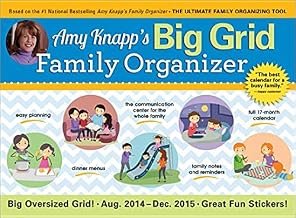
Amy Knapp's Big Grid Family Organizer
A paper calendar with large daily spaces for families who prefer writing schedules by hand.
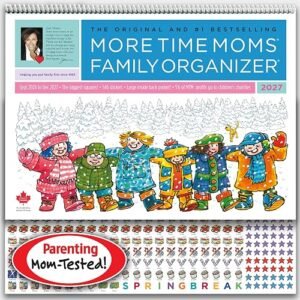
More Time Moms Family Organizer Wall Calendar
A family-focused layout for coordinating several people and recurring activities.
Wall file organizers
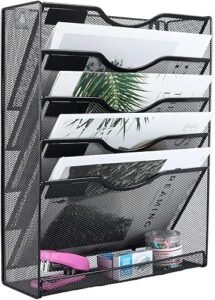
EasyPAG 5-Tier Wall File Holder
A vertical option for readers who want several labeled paper categories in a narrow footprint.
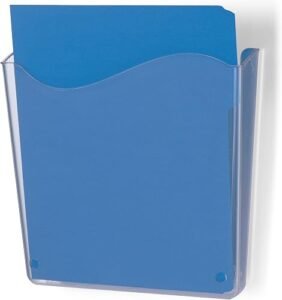
Officemate Wall File Organizer
A simple plastic choice for one or two high-use paper categories.
Magnetic dry-erase boards
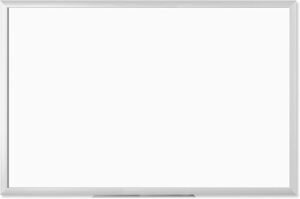
U Brands Magnetic Dry Erase Board
A clean, general-purpose board for lists and short weekly notes.
Free and low-cost versions that work just as well
- Calendar: print a free monthly calendar page and clip it to a cabinet door. Replace it on the last day of each month.
- Paper flow: two labeled folders or cereal-box cutouts—“to do” and “to file”—handle most school and bill paper.
- Message board: the side of the fridge plus a few magnets is a board.
- Emergency information: fill in a single page and keep it inside a cabinet door or the action folder.
Try the free version for two weeks. If something is still missing, that gap—not a catalogue—tells you what, if anything, to buy.
Once it is up: keeping it from becoming clutter
Every layout needs a short weekly clear-off and more than one person keeping it current, or it slowly turns into storage. Our guide to building a command center that stays tidy covers the rules, a five-minute weekly reset script, and what to change when papers pile up or only one adult uses it. If one person is doing all the noticing and updating, our guide to sharing the mental load helps divide ownership.
When it’s more than organization
If keeping track of a family member’s care has become overwhelming, for example with a chronic illness, a disability, or an aging parent, ask your clinician’s office about care coordinators, patient portals, or social work support. If you’re feeling persistently overwhelmed, it’s worth raising with your own health care provider too.
Frequently asked questions
How much wall space do I need?
Very little. The fridge-side strip and cupboard-door layouts fit in about the width of a sheet of paper, and the drawer layout needs no wall at all.
Which layout works best in a small apartment?
Usually the fridge-side strip or the inside of a cupboard door. Both use space you already have, need no drilling, and keep the setup small enough that it cannot sprawl.
Should every appointment go on the wall calendar?
Show what the household needs to coordinate. Keep sensitive details private, such as writing “appointment, 3 p.m.” instead of the reason.
Do we need a separate command center in each home if the children split their time?
A small one in each home helps, but the key is one shared digital calendar and one folder that travels with the child, so nothing depends on which house a form arrived at.
Key takeaways
- Pick the layout by where things enter your home and who needs to read it, not by how it looks online.
- Every layout needs only four pieces: a calendar view, one action spot, key contacts, and a landing place for things that leave the house.
- Small homes can use a fridge side, cupboard door, or drawer; larger families may need a hallway grid or clipboard rail.
- Keep private medical and account details inside a folder, not on display.
- Test a free version for two weeks, then see the anti-clutter guide to keep it working.
Related reads
Sources
Medical disclaimer
This is general information, not personal medical advice, diagnosis, or treatment. A clinician should guide decisions about symptoms, medicines, vaccines, pregnancy, or children. In an emergency, contact local emergency services.
Affiliate disclosure. This article contains Amazon affiliate links. If you buy through a qualifying link, Full Healthy Lives may earn a commission at no extra cost to you. Product mentions are optional, not medical advice.