
Practical Lifestyle
New Habits Never Stick? 20 Small Changes You Can Stack Into Real Life
Try 20 realistic healthy habit stacking ideas that attach small actions to routines you already do, with flexible tracking and no perfection pressure.
13 min read
What this guide covers: what to do: twenty small habits you can attach to routines you already have, and how to write your own stack. For deciding whether and how to track a habit once it starts, see our guide to what is actually worth tracking.
Why a practical system matters
Habit stacking means attaching a small desired action to a dependable cue that already exists. The method is useful when the new action is specific, easy, and compatible with real responsibilities; it is less useful when a tiny cue is expected to solve a complex health problem.
A step-by-step approach
1. Use a cue that already happens
Choose actions such as brushing teeth, starting coffee, arriving at work, lunch, or plugging in a phone rather than a vague time.
2. Make the new action genuinely small
Begin with one stretch, one glass of water, one minute outdoors, or writing tomorrow’s priority.
3. Match the habit to the setting
Keep equipment and prompts where the action happens so the stack does not depend on remembering items from another room.
4. Track lightly
Use a simple checkmark or weekly reflection and stop tracking if it creates anxiety, shame, or unhelpful obsession.
5. Recover quickly after missed days
Return at the next available cue, shrink the action if needed, and treat the miss as information about the system.
6. Know when a habit is not enough
Professional assessment may be needed for persistent sleep, mood, eating, pain, or fatigue concerns; routines do not replace care.
20 healthy habit stacking ideas for real life
- After brushing your teeth: drink a glass of water if that fits your personal fluid needs.
- After starting the kettle or coffee maker: prepare one piece of fruit or another simple breakfast item.
- After opening the curtains: take three slow breaths and notice the daylight.
- After using the bathroom in the morning: apply sunscreen when appropriate for the day’s exposure.
- After putting on shoes: check that your water bottle, keys, and necessary medicines are packed.
- After arriving at work: adjust your chair or workstation and relax your shoulders.
- After reading the first email: write the day’s single most important work task.
- After finishing a meeting: stand, stretch gently, or walk briefly when safe and permitted.
- After refilling water: take several comfortable steps before returning to your seat.
- After washing your hands before lunch: pause long enough to notice hunger and choose a satisfying meal.
- After lunch: walk for two to five minutes or get fresh air when the environment allows.
- After returning home: place keys, bags, and documents in their assigned locations.
- After changing out of work clothes: prepare one item needed for tomorrow.
- After serving dinner: put one portion aside for a planned lunch if food-safety conditions allow.
- After clearing the table: wipe one preparation surface and stop rather than beginning a full clean.
- After plugging in your phone: move it away from the bed or enable a chosen wind-down setting.
- After setting the alarm: write tomorrow’s first action on paper.
- After turning off the main light: read one page, breathe slowly, or use another brief calming cue.
- After a missed habit: restart at the next cue without trying to compensate excessively.
- After the weekly calendar check: choose one stack to keep, shrink, replace, or remove.
A few optional picks
Undated Habit Tracker Journal
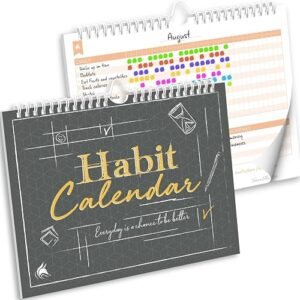
Clever Fox Habit Tracker Calendar
A visual monthly tracker for readers who want several habits visible at once.
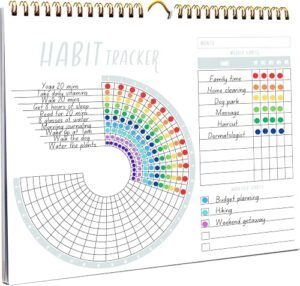
Lamare Habit Tracker Calendar
A colourful undated wall or desk format for simple check-off tracking.
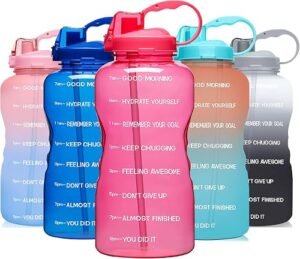
Time Marked Water Bottle
Venture Pal Motivational Water Bottle with Time Marker
A lightweight marked bottle for readers who respond to visible progress cues.
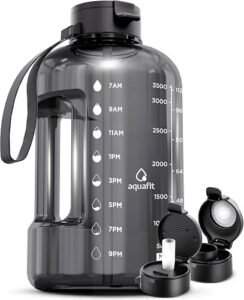
AQUAFIT 1 Gallon Water Bottle with Time Marker
A high-capacity option for readers who do not want frequent refilling and can comfortably carry it.
What to try before buying anything
A habit stack needs a cue and a tiny action, not equipment. Mark a paper calendar with a pen, keep any water glass by the kettle, and use a doorway or wall for stretches. A tracker journal or a marked bottle can help some people, but only after the habit has a dependable cue. If the stack is not sticking, change the cue or shrink the action before adding a product.
How habit stacking works
Habit stacking means attaching a new behavior to something you already do every day, such as “after I pour my morning coffee, I drink a glass of water.” The existing routine acts as a reminder, so you do not have to rely on motivation or memory. The National Institute on Aging notes that behavior change research highlights the role of cues and repetition in forming habits.
Writing your own stack
- List routines you already do daily without thinking, such as brushing teeth, making coffee, or arriving home.
- Pick one small health behavior that takes under two minutes.
- Write it as “After I ___, I will ___.”
- Place any needed item where the cue happens, such as a water glass by the kettle.
- Repeat it for two weeks before adding another.
Examples by time of day
- Morning: after I brush my teeth, I do ten squats.
- Commute: after I park, I walk the long way to the entrance.
- Workday: after each meeting, I stand and stretch for one minute.
- Evening: after dinner, I take a ten-minute walk.
- Bedtime: after I plug in my phone in the kitchen, I read for ten minutes.
When a stack does not stick
If you keep forgetting, the cue may not be reliable or the new habit may be too big. Choose a cue that happens at the same time every day and shrink the habit until it feels almost too easy. Track it on a simple chart, such as our healthy habits tracker, so you can see progress over weeks.
Stacking habits as a family
Families can stack habits together: after dinner, everyone clears one item and then the family walks around the block; after brushing teeth, children choose tomorrow’s clothes. Shared routines are easier to keep because everyone reminds each other. Keep them small and celebrate when they become automatic.
Avoid stacking too much at once
It is tempting to build a long chain of new habits. If one link breaks, the whole chain may fall apart. Add one habit at a time and wait until it feels automatic, usually after a few weeks, before adding another to the stack.
Key takeaways
- Attach each new habit to a routine you already do daily.
- Keep the new habit under two minutes at first.
- Add one habit at a time and wait until it feels automatic.
- If a stack keeps failing, change the cue or shrink the habit.
Frequently asked questions
How many habits should I stack at once?
Start with one or two. Add another only after the earlier action feels easy and dependable.
How long does a habit take to form?
There is no universal number of days. Complexity, context, repetition, and individual circumstances all matter.
Do hydration reminder bottles work?
They can provide a visual cue, but fluid needs vary. People with fluid restrictions or relevant conditions should follow professional advice.
When to seek expert help
Small habits are a good way to start, but they are not treatment. Talk with a clinician before starting a new exercise routine if you have a heart condition, a recent injury, pain with movement, or you are pregnant. If you have been told to limit fluids, follow that advice rather than a general water goal. And if you notice that tracking makes you anxious, guilty, or obsessive about food, weight, or exercise, stop tracking and talk with a professional.
This guide is general information, not personal medical advice. In an emergency, call 911 or your local emergency number.
Related reads
Sources
- NIH News in Health — Whole Person Health
- NIH — Your Healthiest Self Wellness Toolkits
- NIMH — Caring for Your Mental Health
- NIDDK — Health Tips for Adults
- National Institute on Aging — Adopting Healthy Habits
Affiliate disclosure. This article contains Amazon affiliate links. If you buy through a qualifying link, Full Healthy Lives may earn a commission at no extra cost to you. Product mentions are optional, not medical advice.