
Practical Lifestyle
No Space or Time for Self-Care? Design a Small Self-Care Corner
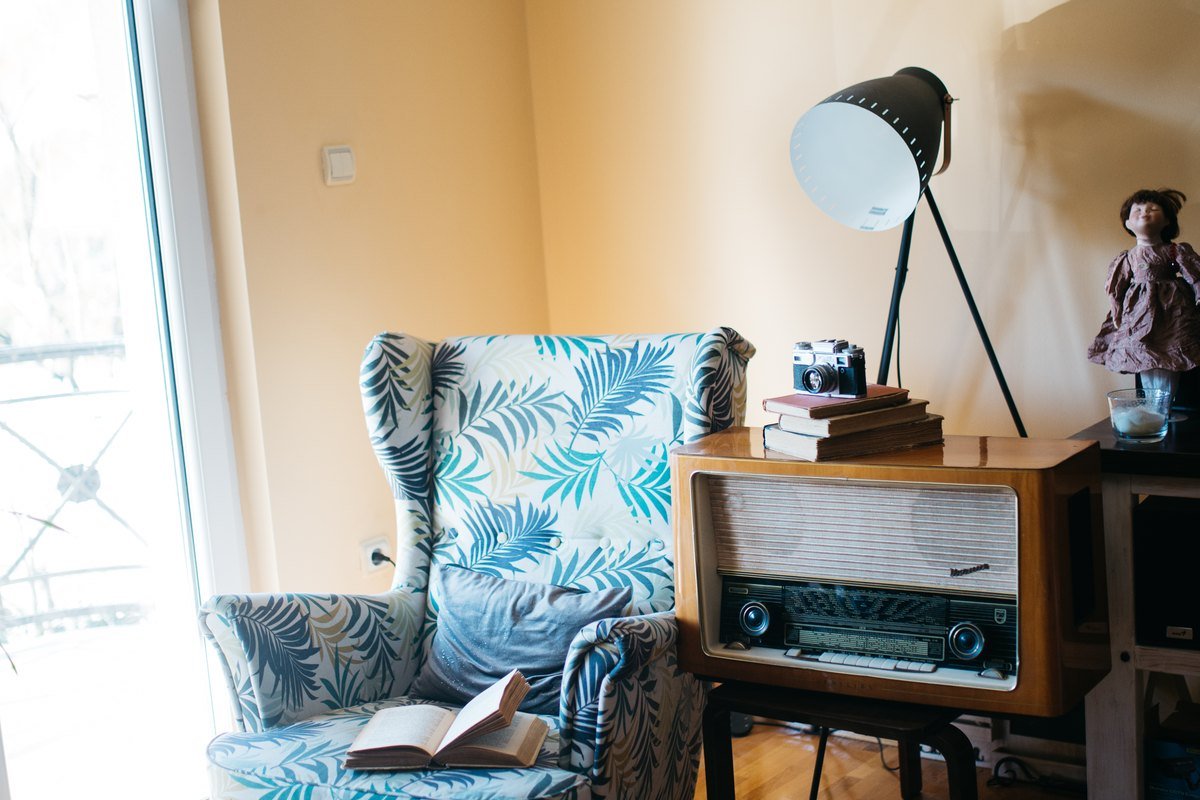
Create a practical self-care corner in a small home using one comfortable seat, good light, compact storage, and routines that support real rest.
12 min read
What a self-care corner is for
A self-care corner is a small, set-up spot that makes one restful activity easier to start—reading, slow breathing, journaling, stretching, or simply sitting without a screen. It is not decoration and it is not a cure for stress. Its job is to remove the small barriers (finding a seat, clearing a surface, looking for a pen) that stop a ten-minute break from happening. The National Institute of Mental Health lists regular relaxing activities, good sleep, and staying connected with others among everyday ways to care for your mental health; a corner simply gives one of those a home.
Step 1: Pick one activity first
Decide what you will actually do there before choosing a spot or buying anything. Each activity needs something different:
| Activity | What it needs | What it does not need |
|---|---|---|
| Reading | A seat with back support and good light | A bookshelf full of new books |
| Breathing or quiet sitting | A cushion or chair and a few minutes without interruption | An app subscription |
| Journaling | A flat surface, a notebook, and a pen that lives there | A special planner |
| Stretching | Floor space about the length of your body and a non-slip surface | A full home gym |
Step 2: Find space you already have
- A bedroom corner beside a window or lamp
- One end of a sofa that is “yours” after the children are in bed
- A landing, wide hallway, or the end of a dining table
- For shared or very small homes, a basket you carry to any chair
Choose the place you already drift to when you get a quiet moment. A corner you have to walk past the laundry to reach will rarely be used.
Step 3: Set it up for comfort and safety
- Keep the walkway clear and tuck cords along walls so nobody trips.
- Use a lamp with a stable base or a clip light; avoid stacking lamps on soft furniture.
- Choose battery candles over open flames, especially around children, pets, curtains, or if you might fall asleep.
- Skip strong fragrances if anyone in the home has asthma or allergies.
- If anyone in the home is a young child, keep small items, essential oils, and medicines out of the corner entirely.
Step 4: Keep it to a few objects
Limit the corner to what the chosen activity needs—usually a seat, a light, and one small basket or tray. When everything fits in one basket, the space can be reset in under a minute and does not become another surface for clutter.
Step 5: Agree on how the space is shared
Tell the household when you plan to use it and what still counts as a reason to interrupt. A simple signal—headphones on, a cushion turned over, a note on the door—helps. If children share the room, consider giving them their own small spot so the corner does not become a battleground.
Corner ideas by situation
- Parents of young children: a chair near the nursery or play area with a book and a water glass, so a nap or quiet-play window can become a rest window.
- Shift workers: a spot away from bright light where you can wind down after a night shift; see our shift-work routine guide.
- Studio or shared room: a basket with a lap blanket, notebook, and reading light that comes out at a set time.
- At work: a short walk and a few slow breaths in a quiet stairwell can do the same job; our work wellness kit covers what to keep at your desk.
Five-minute weekly reset
- Return anything that does not belong to the corner.
- Shake out the blanket or cushion and wipe the surface.
- Check the lamp, battery candle, or charger still works.
- Ask yourself whether you used the corner this week. If not, move it or change the activity.
If you never use the corner
That is useful information, not a failure. Usually one of three things is happening: the spot is in the wrong place, the activity is not one you actually enjoy, or there is no protected time for it. Try pairing the corner with something that already happens every day, such as sitting there for five minutes after the children’s bedtime or before your first coffee. Our habit stacking ideas explain how to attach a new routine to an existing cue, and the 10-minute stress reset gives you something specific to do once you sit down.
A few optional picks
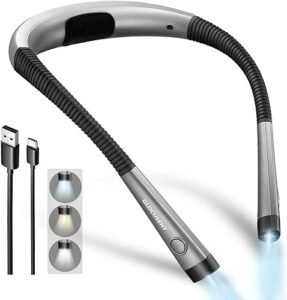
Adjustable Reading Lamp
Glocusent LED Neck Reading Light
A wearable option for shared rooms where directional personal light is useful.
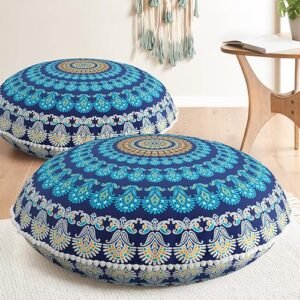
Supportive Floor Cushion
Codi Meditation Floor Pillow
A round floor cushion for readers who prefer an upright cross-legged sitting position.
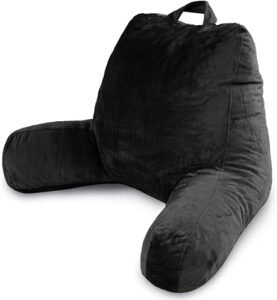
Milliard Reading Pillow
A back-support style for readers sitting against a wall, bed, or firm surface.
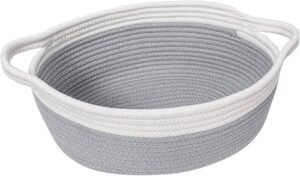
Small Woven Storage Basket
Goodpick Small Woven Basket
A soft handled basket for books, journals, chargers, or a portable self-care kit.
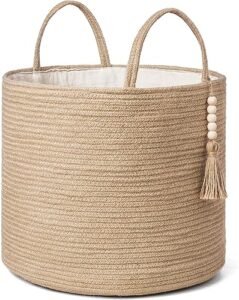
Mkono Woven Storage Basket
A decorative compact option for shelves and small personal items.
Frequently asked questions
Do I need to buy new furniture?
No. Moving a chair, cushion, lamp, or basket you already own is usually enough. Buy something only after a week or two shows exactly what is missing.
Can a self-care corner be temporary?
Yes. A portable basket and a consistent chair can create a repeatable ritual in a multipurpose room.
How long should I spend there?
Even five to ten minutes can be enough to start. Consistency matters more than length.
When to seek expert help
A quiet corner can support rest, but it is not a substitute for care. Talk with a doctor or mental health professional if stress, low mood, anxiety, or exhaustion lasts for more than two weeks, is getting worse, or makes it hard to work, sleep, or care for yourself or others. Parents can find signs to watch for in our guide to parental burnout. If you are thinking about harming yourself, call or text 988 (in the U.S.) to reach the 988 Suicide & Crisis Lifeline, or call 911.
This guide is general information, not personal medical advice. In an emergency, call 911 or your local emergency number.
Key takeaways
- Choose one restful activity first, then the spot, then—only if needed—the products.
- The best corner is a place you already drift to, set up with a seat, light, and one basket.
- Safety matters even in a small space: clear walkways, stable lamps, and no open flames near children or bedding.
- If the corner goes unused, move it, change the activity, or attach it to a daily cue.
- Persistent stress or low mood deserves professional support, not just a nicer space.
Related reads
Sources
- NIH News in Health — Whole Person Health
- NIH — Your Healthiest Self Wellness Toolkits
- NIMH — Caring for Your Mental Health
- NIDDK — Health Tips for Adults
- 988 Suicide & Crisis Lifeline
Affiliate disclosure. This article contains Amazon affiliate links. If you buy through a qualifying link, Full Healthy Lives may earn a commission at no extra cost to you. Product mentions are optional, not medical advice.