
Preventive Health
Confused by Nutrition Labels? How to Read Them Without Overwhelm
A quick, calm way to use the Nutrition Facts label: start with the serving, use the 5% and 20% Daily Value guide, and compare two similar products on the few lines that matter to you.
7 min read
The Nutrition Facts label packs a lot onto a small panel, but you don’t need to read every line every time. Most decisions in the grocery aisle come down to three things: how much is a serving, which two or three nutrients matter for this food and for you, and how two similar products compare. This guide walks through the label from top to bottom, then gives you a 30-second method and a worked example.
Begin with the serving information
The serving size tells you what amount the numbers describe; it is not automatically the amount you should eat. Check servings per container. If you consume twice the listed serving, most calories and nutrients are roughly doubled. Compare the serving with what you actually pour, scoop, or share before judging the rest of the label. FDA notes that serving sizes are standardized and reflect what people typically eat. Some larger packages that could be finished in one sitting now carry a dual-column label showing amounts both per serving and per package, which makes this easier.
Use calories as context, not a verdict
Calories describe energy, not overall food quality. A lower-calorie product is not always more nutritious, and a higher-calorie food can still fit a balanced pattern. Needs vary with body size, age, activity, pregnancy, health conditions, and goals. Look at calories together with serving size, nutrients, and the role the food plays in the meal. Labels use 2,000 calories a day as a general reference. Your own needs may be higher or lower.
Understand percent Daily Value
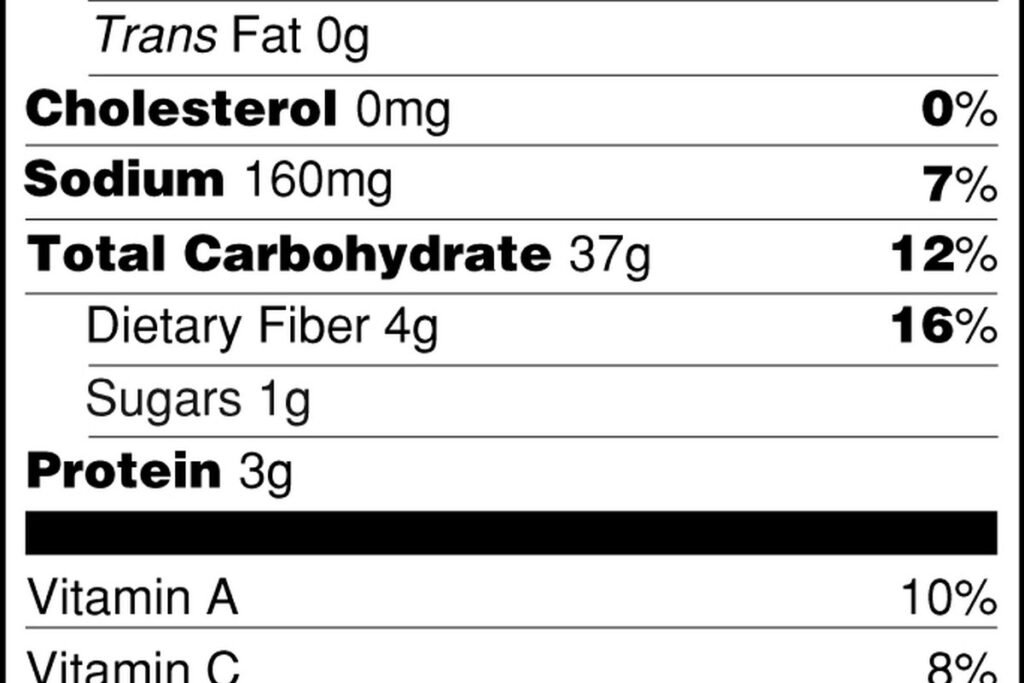
Percent Daily Value, or %DV, helps show whether one serving contributes a little or a lot of a nutrient within the reference diet used on the label. As a quick guide on US-style labels, 5% DV or less is considered low and 20% DV or more is high. Other countries may use different reference values or formats, so check the label notes.
Nutrients many people may want to limit
Compare saturated fat, sodium, and added sugars, especially among products you eat often. “No added sugar” does not mean sugar-free, and low-fat products can still be high in sodium or sugar. People with specific medical conditions may have different priorities. Follow individualized advice from a qualified clinician or dietitian. FDA identifies these three as nutrients most Americans eat too much of. “Total Sugars” includes the natural sugar in milk and fruit, while “Includes Added Sugars” shows only what was added during processing, from syrups and honey, or from concentrated juice. That added sugars line is the more useful one to compare. If you’re tracking blood pressure, our guide to keeping a home blood pressure log explains what to bring to your clinician, who can tell you whether a sodium target applies to you.
Nutrients to look for
Dietary fiber, protein, vitamin D, calcium, iron, potassium, and other listed nutrients can help compare options, but no single package must be high in everything. Consider the whole diet. A breakfast cereal with fiber may be paired with milk and fruit; canned beans may provide fiber and protein even if sodium requires attention. FDA lists dietary fiber, vitamin D, calcium, iron, and potassium as nutrients many Americans don’t get enough of.
Read the ingredient list
Ingredients are generally listed by weight from greatest to least. Look for ingredients you need to avoid because of allergy, intolerance, religious practice, or personal preference. Multiple names can refer to added sugars. A long ingredient list is not automatically harmful, and a short one is not automatically healthy. Use the list to answer a specific question.
Compare like with like
Compare products with similar serving sizes and uses. Check the same two or three features rather than every number: perhaps fiber, sodium, and added sugar for bread; or saturated fat, protein, and sodium for a main dish. Marketing claims on the front of the package should lead you to verify the full label, not replace it.
A calm 30-second method
First, check serving size. Second, identify the two nutrients most relevant to your goal. Third, compare %DV or amounts between similar products. Fourth, check allergens and ingredients. Finally, decide whether the food fits your overall pattern and budget. Nutrition labels inform choices; they do not assign moral value to food or to the person eating it.
A worked example
Say you’re choosing between two loaves of whole-grain bread for school sandwiches. Both list a serving as one slice, so you can compare directly. Pick three lines that matter for bread: fiber, sodium, and added sugars. Loaf A has 3 grams of fiber, 9% DV sodium, and 2 grams of added sugars. Loaf B has 1 gram of fiber, 13% DV sodium, and 4 grams of added sugars. Neither is “bad,” but Loaf A gives more of what you want and less of what you’re limiting. Check the ingredient list for allergens, look at the price, and you’re done.
The same approach works for cereal, yogurt, soup, or snack bars. Just choose the lines that fit the food. For a canned soup, sodium is usually the one to watch. For yogurt, added sugars and calcium. For snack bars, fiber and added sugars. If you’re filling a lunch box, our guide to kids’ lunch containers covers packing food safely once you’ve chosen it.
Quick label checklist
Make it part of your weekly routine
You don’t need to read labels on everything. Focus on the packaged foods you buy most often. Compare those once, choose a version you’re happy with, and add it to your regular list. After that, check labels only when you try something new or a product changes. Our beginner’s meal-planning system builds that kind of master grocery list. If you’re pregnant, our pregnancy meal-planning guide covers the foods and food-safety steps that matter during pregnancy.
If you have a condition such as diabetes, kidney disease, high blood pressure, or a food allergy, your clinician or a registered dietitian may give you specific targets. Those take priority over the general guide on the label. Bring a couple of labels from foods you eat often to your next checkup if you have questions.
A 60-second label pass
Compare two products side by side
Put both packages on the counter. Match serving sizes first. Then compare the one or two nutrients you care about and the first three ingredients. Choose the option that fits your plan—not the louder front label. Teach older kids the same two-step habit so grocery trips get faster.
If labels still feel overwhelming
- Too many numbers: pick one priority (e.g., added sugar or sodium) for a month.
- Front-of-pack hype: ignore “detox” claims; verify with how to check health claims.
- Building meals: pair label skills with simple meal planning and protein breakfast ideas.
Frequently asked questions
Does the serving size tell me how much I should eat?
No, it only describes the amount the numbers cover. If you eat two servings, most calories and nutrients are roughly doubled.
What does 5% Daily Value mean on a US label?
On US-style labels, 5% Daily Value or less is low. Twenty percent or more is high for the reference diet printed on the label. Other countries may use different reference values.
Does “no added sugar” mean the food is sugar-free?
No, sugar can still be in the food even when none was added. A low-fat product can also be high in sodium or sugar. Read the ingredient list on the same package.
Medical disclaimer
This content is for general educational purposes only and is not medical advice, diagnosis, or treatment. Recommendations vary by person and location. Consult an appropriately qualified health professional about personal concerns. In an emergency, contact local emergency services.
Key takeaways
- Start with serving size, then the nutrients your clinician asked you to watch.
- Use labels to compare similar foods—not to chase perfection.
- Ingredient lists matter for allergens and added sugars.
- Marketing banners are not nutrition facts.