
Stuffy, Damp, or Dusty Home This Fall? An Indoor Air Quality Checklist
As windows close for the season, a room-by-room checklist for moisture, mold, dust, ventilation, and heating safety, based on EPA and CDC guidance rather than “detox” products.
Fall is when most households close the windows, turn the heat back on, and spend more hours indoors. That makes it a good time to check the things that most affect the air inside your home: moisture, dust, ventilation, and fuel-burning appliances. EPA describes three basic strategies for better indoor air: control the sources, bring in outdoor air, and use air cleaning as a supplement. This checklist follows that order. Most of it costs little or nothing.
1. Start with moisture
EPA puts it simply: the key to mold control is moisture control. Before you buy anything, walk through the house and look for water where it shouldn’t be:
- Under kitchen and bathroom sinks, and around toilets and tubs.
- Around windows, especially condensation on the inside of the glass on cold mornings.
- In the basement or crawl space, laundry area, and around the water heater.
- Near the heating and cooling equipment, including the air conditioner’s drip pan and drain line.
- Ceilings under bathrooms, and the attic after a heavy rain.
Fix leaks promptly. EPA advises drying water-damaged areas and items within 24 to 48 hours to prevent mold growth. Outside, make sure gutters are clear and the ground slopes away from the foundation so water doesn’t collect there.
2. Measure humidity instead of guessing
EPA recommends keeping indoor relative humidity below 60%, ideally between 30% and 50%. An inexpensive humidity meter (EPA puts them at roughly $10 to $50 at hardware stores) shows you where you stand. Check a few rooms, including the bathroom after a shower and the basement.
- Too high (over 50 to 60%): run exhaust fans longer, ventilate when the weather allows, and consider a dehumidifier in damp areas.
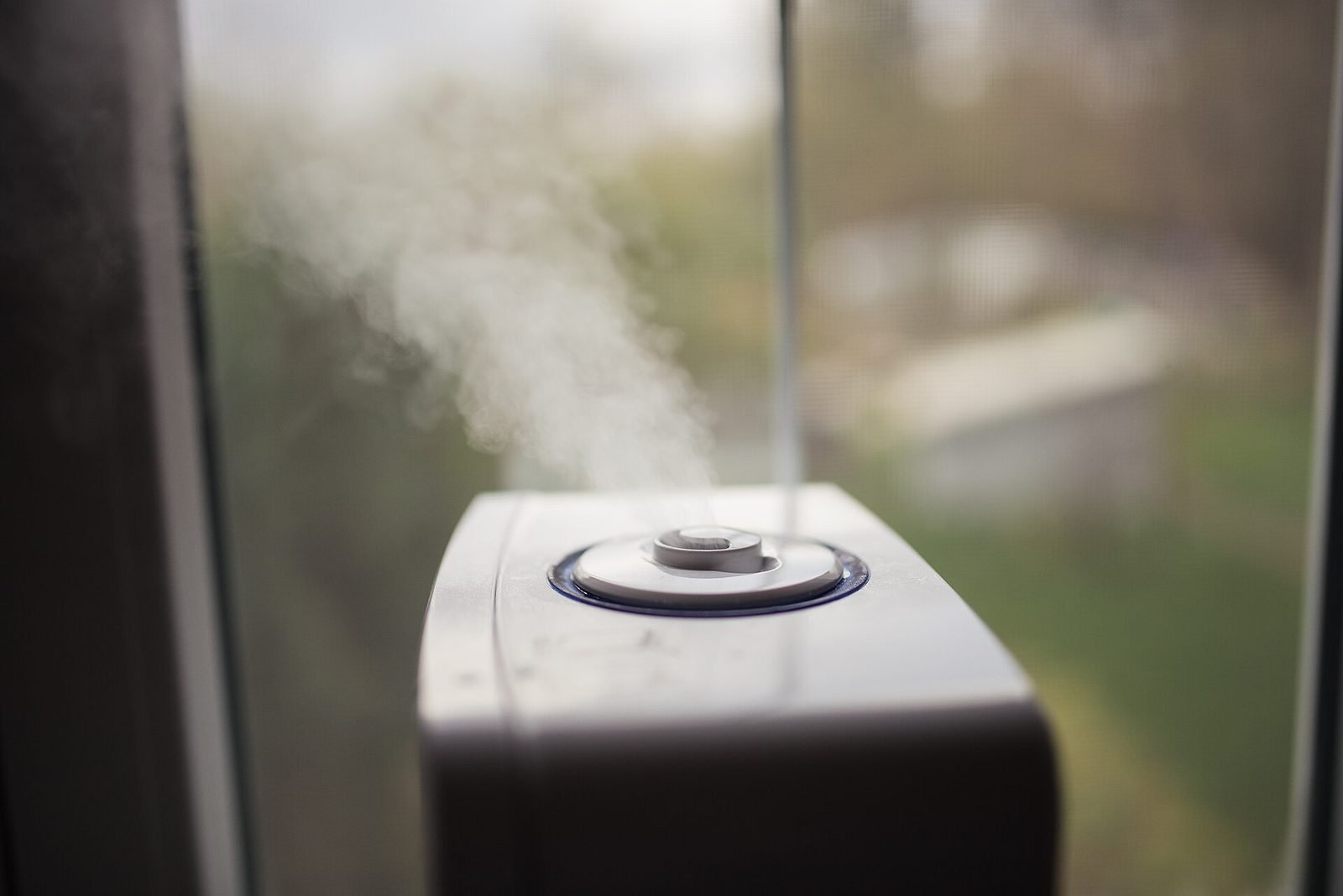
- Too low, as can happen with winter heating: if you use a humidifier, keep it clean according to the manufacturer’s directions and don’t push the humidity above the recommended range. Condensation on windows is a sign it’s too high.
3. Deal with mold correctly
Molds can trigger allergic reactions and asthma attacks in people who are sensitive, and can irritate the eyes, skin, nose, throat, and lungs. According to EPA:
- If the moldy area is less than about 10 square feet (roughly a 3-by-3-foot patch), you can usually clean it yourself. Wear gloves and goggles, and avoid touching mold with bare hands.
- If there’s been a lot of water damage, or mold covers more than 10 square feet, consult EPA’s guidance on larger cleanups or a qualified professional.
- Don’t paint or caulk over mold. Clean it and dry the surface first.
- If mold keeps coming back in the bathroom, more ventilation and more frequent cleaning usually help.
If mold returns after cleaning, the water source hasn’t been fixed. If you rent, tell your landlord in writing about leaks and mold.
4. Ventilate where pollutants start
Run kitchen and bathroom exhaust fans that vent outdoors while cooking and showering, and for a while afterward. Open windows and doors when the outdoor air quality and weather allow. That may not be a good idea during wildfire smoke, high pollen, or very poor outdoor air. EPA notes that everyday activities like cooking and cleaning can add more particles to indoor air than dirty ducts do, so it’s worth using the range hood every time you cook.
5. Check filters and use air cleaners as a supplement
EPA suggests using the highest-efficiency filter your HVAC system’s manufacturer recommends, changing it regularly, and changing it more often if it clogs. Make sure the filter fits without gaps that let air bypass it. A portable air cleaner can help reduce particles in a room, but EPA says air cleaning alone isn’t generally enough. It supplements source control and ventilation. If you buy one, choose a model that does not intentionally produce ozone.
6. Reduce dust without stirring it up
EPA recommends decluttering, wiping dust with a damp cloth, and vacuuming regularly to help reduce allergens and asthma triggers. A vacuum with a HEPA filter or the highest-efficiency bags your vacuum takes keeps more dust out of the air. Fragranced sprays and plug-ins cover smells but don’t remove what causes them.
7. Make heating season safe
This is the most important step if you have any fuel-burning appliances.
- Service fuel-burning equipment every year. CDC recommends having your heating system, water heater, and any other gas, oil, or coal-burning appliances serviced by a qualified technician every year. EPA likewise advises inspecting furnaces, stoves, and fireplaces before each heating season. Have chimneys checked or cleaned every year.
- Install carbon monoxide alarms. CDC recommends battery-operated or battery-backup CO detectors near every sleeping area, checking batteries when the clocks change in spring and fall, and replacing detectors as the manufacturer directs or every 5 years.
- Test smoke alarms every month. Our guide to healthy home essentials on a budget explains where smoke alarms belong and how to get them free.
- Never heat your home with a gas oven, burn charcoal indoors, or run a generator inside the house or garage. CDC says generators belong outside, more than 20 feet from windows, doors, and vents.
Carbon monoxide has no color or smell. Symptoms such as headache, dizziness, weakness, nausea, vomiting, chest pain, and confusion are often mistaken for the flu. If your CO alarm sounds or several people in the home feel sick at once, get everyone outside to fresh air and call 911.
8. Consider a radon test
Radon is an invisible, odorless gas that comes from the ground. EPA estimates it’s the second leading cause of lung cancer overall and the leading cause among people who have never smoked. Testing is the only way to know your level, and inexpensive home kits are available. EPA recommends fixing your home if the level is 4 pCi/L or higher, and considering it between 2 and 4 pCi/L. Fall and winter, when windows stay closed, are a practical time to test.
9. Skip the services you don’t need
EPA does not recommend routine air duct cleaning. It suggests considering it only for specific problems: substantial visible mold inside hard ducts or system components, pests in the ducts, or ducts clogged with debris that blows out of the registers. Duct cleaning has never been shown to prevent health problems, and a light layer of dust in ducts is normal. Be wary of anyone who promotes duct cleaning as routine maintenance or makes sweeping health claims. The same goes for “air detox” gadgets and ozone generators sold as air cleaners. Ozone is a lung irritant.
A 30-minute fall walkthrough
- Check under sinks, around windows, and in the basement for leaks or condensation (10 minutes).
- Read the humidity in two or three rooms (5 minutes).
- Check the HVAC filter and note the size for next time (5 minutes).
- Test smoke and CO alarms, and put the replacement dates on your calendar (5 minutes).
- Book the furnace or boiler service, and order a radon test if you’ve never done one (5 minutes).
Our Sunday reset routine is a good place to keep the monthly alarm test. If you have a baby or toddler, our room-by-room baby safety audit pairs well with this walkthrough, and our family emergency kit checklist covers what to have ready if the power goes out.
When to talk to a clinician
If someone in your household has asthma or allergies that are getting harder to control indoors, or has symptoms you think are related to the home, talk to their clinician. EPA suggests the same for unexplained symptoms you suspect are related to your home environment. Bring notes on when symptoms happen and in which rooms. Indoor air checks support care for respiratory conditions but don’t replace it.
A one-hour fall air check
Skip “detox” sprays. Cleaning and moisture control beat fragrance. If you rent, document issues in writing for the landlord when repairs are required.
If the air still feels wrong after basic fixes
- Humidity stays high: find moisture sources (leaks, damp basement, overcrowded closets); a dehumidifier helps only if you empty it and fix the source.
- Dust returns daily: reduce clutter, vacuum with a sealed system if you have one, and wash bedding regularly.
- Odors or headaches persist: stop using strong fragrances; air out when outdoor air is reasonable; seek professional inspection for mold or combustion issues.
- Symptoms are medical: wheezing, chest pain, or severe allergic symptoms need clinical care—not only a checklist.
Budget upgrades can wait until the free steps are done—see healthier home priorities on a budget. For fall routines that include the rest of the week, pair with a midweek household reset.
Frequently asked questions
What indoor humidity should I aim for in fall?
EPA recommends keeping it below 60%, ideally between 30% and 50%. A basic humidity meter is the easiest way to check.
Will an air purifier fix a mold problem?
No. A purifier may reduce some airborne particles, but mold grows because of moisture. Fix leaks and dampness, then clean the mold.
Do air ducts need cleaning every fall?
No. EPA recommends duct cleaning only as needed, for substantial visible mold, pests, or ducts clogged with debris. It does recommend servicing fuel-burning furnaces, stoves, and fireplaces before each heating season.
Where should carbon monoxide alarms go?
CDC recommends battery-operated or battery-backup CO detectors near every sleeping area. Follow the manufacturer’s instructions for placement and replacement.
Medical disclaimer
This is general information, not personal medical advice, diagnosis, or treatment. A clinician should guide decisions about symptoms, medicines, vaccines, pregnancy, or children. In an emergency, contact local emergency services.
Key takeaways
- Control moisture, ventilation, dust, and combustion safety before buying gadgets.
- Fix leaks and damp sources; do not perfume over mold or poor ventilation.
- Use filters and cleaning habits you can maintain.
- See a clinician for breathing symptoms and call professionals for suspected serious mold or carbon monoxide risk.
Related reads
Sources
- U.S. EPA – Improving Your Indoor Environment
- U.S. EPA – A Brief Guide to Mold, Moisture, and Your Home
- U.S. EPA – Should You Have the Air Ducts in Your Home Cleaned?
- U.S. EPA – Ozone Generators That Are Sold as Air Cleaners
- U.S. EPA – Health Risk of Radon
- CDC – Carbon Monoxide Poisoning Basics
- U.S. EPA – Care for Your Air: A Guide to Indoor Air Quality